How to Design Your Play Therapy Office: Expert Guidelines for Maximum Therapeutic Impact
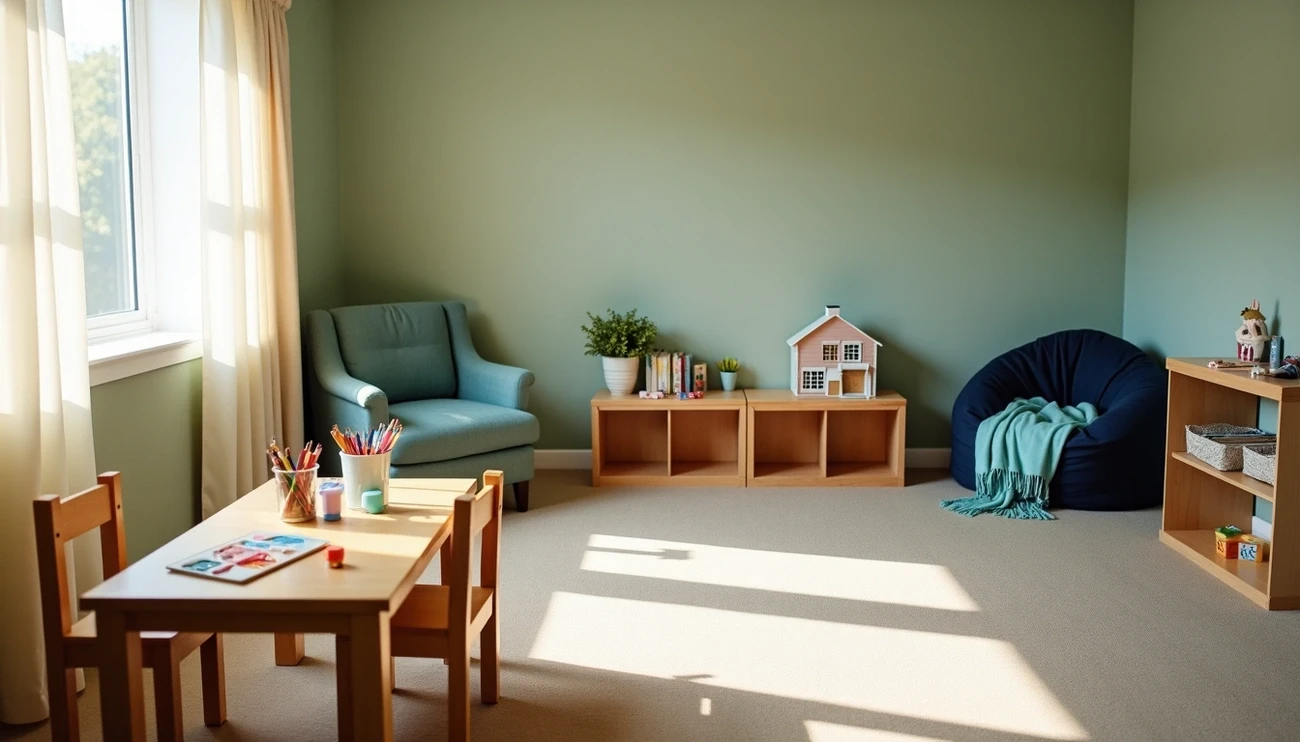

Jan 21, 2026
Your play therapy office is more than just a room—it's a powerful clinical instrument that can either enhance or hinder the therapeutic process. With over 20+ years of utilizing play therapy, experienced therapists have found that the physical environment plays a crucial role in a child's willingness to open up and engage.
Creating an effective play therapy room requires thoughtful design and organization. Essentially, the ambiance and layout of your space directly impact how children process their emotions during sessions. Furthermore, children with sensory differences may become dysregulated even before therapy begins—sometimes as early as entering the waiting room. As you plan your play therapy office design, understanding these sensory needs becomes vital to creating a truly therapeutic environment.
Whether you're setting up your first play therapy office or looking to improve your existing space, this comprehensive guide will walk you through expert-approved principles for designing a room that maximizes therapeutic impact. From essential play therapy materials (like quality Crayola crayons and individualized PlayDoh containers for hygiene) to creating consistency in temporary spaces, you'll discover how to transform your office into a healing environment that supports children's emotional growth and development.
Core Design Principles for a Therapeutic Playroom
Designing a therapeutic playroom requires intentional planning that goes well beyond esthetics. The physical environment serves as a silent co-therapist, significantly influencing a child's sense of safety and willingness to engage in the therapeutic process.
Safety and Predictability in Room Layout
A child's nervous system instantly scans for threat upon entering a new space. Consequently, your play therapy room must signal safety at both physical and psychological levels. Start with thorough childproofing—cover electrical outlets, anchor furniture securely to prevent tipping, and eliminate sharp edges or corners that could cause injury [1].
Predictability forms the foundation of psychological safety. Children, particularly those who experience chaotic home environments, need consistent room arrangements where toys and materials remain in the same locations session after session [2]. This predictable environment becomes a "trustworthy, dependable space" that allows children to focus on their inner work rather than adjusting to external changes [1].
The room's location also matters—ideally, select a space distanced from other offices where children can express themselves loudly without disruption [3]. Additionally, ensure visual privacy through covered windows or curtains while maintaining a warm, inviting atmosphere with adjustable lighting and comforting colors [1]. Remember that approximately 150-200 square feet provides the optimal space for one child and one therapist to move comfortably [3].
Accessibility of Materials for Child Autonomy
Autonomy stands as a fundamental human need, especially for children who have experienced powerlessness through trauma or developmental challenges [2]. Your room arrangement should facilitate this autonomy through thoughtful accessibility features.
Position shelves at child-friendly heights—no taller than 38 inches—so children can independently access materials without asking for help [3]. This simple design choice communicates respect for their capabilities and encourages self-directed exploration. Use clear, labeled bins with pictures for pre-readers to further support independent selection [4].
Research confirms that children who experience autonomy in decision-making develop higher self-esteem and improved coping mechanisms [5]. In fact, studies show that when given choices within boundaries, children exhibit greater engagement, reduced resistance, and increased willingness to participate in therapy [5].
The accessibility principle extends beyond physical reach—it includes visual organization that helps children understand what's available without overwhelming them. As noted by experienced therapists, "Too many visible options overwhelm children, particularly those with sensory processing challenges" [2]. Instead, consider incorporating closed cabinets for most supplies, with only a carefully curated selection visible at any time.
Containment Through Scaled-Down Furniture and Zones
Containment—the process of helping children manage overwhelming emotions in a calm, safe, and organized way—begins with the physical environment [6]. Your playroom should provide this containment through appropriately scaled furniture and clearly defined zones.
Select sturdy, child-sized tables and chairs rather than adult furniture [3]. As the therapist, use a low-seated rolling chair that allows you to move to the child's level rather than expecting them to adjust to yours. This physical arrangement reduces power imbalances and enhances connection.
Divide your space into distinct functional zones to provide structure and clarity. For optimal therapeutic impact, consider including:
A transition zone near the entrance with items like a feelings chart
A catharsis zone with open floor space for active play
A creation zone for art activities and imaginative play
A regulation zone with comfortable seating and calming materials
These clearly defined areas help children understand "what happens where," reducing the cognitive load of navigating unknown environments [2]. This zoning approach also supports different therapeutic needs within a single session, allowing for movement between expressive and regulating activities as needed.
Ultimately, a well-designed play therapy room creates what neurobiologists recognize as safety signals—consistent environments with familiar setups that help traumatized children's nervous systems settle enough for therapeutic work to begin [2].
Choosing Toys as Therapeutic Tools
Selecting the right therapeutic toys transforms a play therapy office from a mere collection of items into a powerful clinical toolbox. Each toy serves a specific therapeutic purpose—they aren't just randomly chosen but intentionally selected to facilitate healing, expression, and growth.
Nurturing and Family Toys: Dolls, Dollhouse, Medical Kits
Nurturing toys enable children to explore relationships, caregiving dynamics, and family structures in a safe, symbolic environment. Dollhouses with diverse family figures allow children to recreate scenarios from their lives or express desires for different family interactions. As children manipulate these figures, they often project their experiences onto the dolls, providing valuable insights into their home environment.
Medical kits serve a unique therapeutic purpose for children processing medical trauma or anxiety. Through playing doctor, children gain a sense of control over experiences where they previously felt powerless. Moreover, nurturing toys help children express emotions that might otherwise remain hidden, especially regarding family dynamics or attachment concerns.
Aggression and Control Toys: Bop Bags, Rubber Weapons
Despite concerns some might have, aggression-release toys serve a vital therapeutic function. Quality bop bags (with Brandy's Bag of Air being highly recommended for durability) provide safe outlets for expressing anger or frustration physically [7]. In child-centered play therapy, aggressive toys like toy soldiers, rubber knives, and symbolic weapons help children release emotions typically suppressed in other settings.
Children often use these toys to explore themes of protection, danger, revenge, or justice—telling stories they don't yet have words for [8]. As noted by researchers, "When a child picks up a toy gun or plastic knife, it's not about violence—it's often about power, fear, control, or safety" [8].
Additionally, consider including egg cartons for stomping, magazines that can be torn, and popsicle sticks that can be broken—these redirectable destruction items provide appropriate channels for aggressive impulses [7].
Creative Expression Tools: Art Supplies, Legos, Puppets
Creative expression tools offer children alternative languages for communicating complex emotions. Art supplies like crayons, markers, and clay provide tactile engagement that helps ground anxious children while allowing for emotional expression without requiring words. Legos and building materials foster problem-solving skills while enabling symbolic construction of experiences.
Puppets hold special value in play therapy because they create emotional distance, allowing children to express difficult feelings through a character rather than directly. Dr. Beth Onufrak explains how puppets effectively facilitate communication: children often feel safer voicing feelings through puppets, which reduces anxiety around sensitive topics [9].
Regulation and Sensory Items: Weighted Blankets, Kinetic Sand
Regulation tools help children manage their nervous system states during therapy. Weighted items—including blankets (5-10 lbs), lap pads, and stuffed animals—provide grounding sensory input that helps dysregulated children return to a calm state [10]. These items prove particularly valuable for children with trauma histories who struggle with emotional regulation.
Sensory items like kinetic sand, textured toys, and fidgets give children tactile experiences that support focus and reduce anxiety. These tools serve both as therapeutic interventions and as supports that enable deeper therapeutic work by maintaining optimal arousal levels.
Why to Avoid Electronic and Competitive Toys
Research strongly cautions against electronic toys in therapeutic settings. Studies demonstrate that electronic toys significantly reduce verbal interaction—children produce up to 67 fewer words per minute when playing with electronic toys compared to traditional toys [11]. Furthermore, research indicates parents are less responsive and engage in lower-quality interactions with children when electronic toys are present [12].
As explained by researchers, "Parents tend to let the toys do the talking for them" [13]. This undermines the core therapeutic goal of facilitating emotional expression and connection. Instead of supporting creative expression, electronic toys direct play, limiting the child's ability to process emotions in personalized ways.
Competitive toys similarly hinder therapeutic goals by shifting focus toward winning rather than emotional processing. The therapy space should remain free from performance pressure, allowing children to explore without fear of failure or judgment.
Zoning the Play Therapy Office for Function
Dividing your play therapy office into functional zones transforms a simple room into a sophisticated therapeutic instrument. First and foremost, zoning creates predictability, helping children understand what happens where while accommodating different emotional needs within a single session.
Transition Zone: Entry Bench, Feelings Chart
The entry area of your play therapy office functions as more than just a waiting space—it's a critical decompression chamber that bridges the outside world and the therapeutic work ahead [1]. This transition zone serves three essential functions: regulating emotional intensity, building initial trust, and signaling that this environment operates differently from other adult-controlled spaces [1].
In this area, include an entry bench where children can literally and figuratively "land" before diving into therapy. A feelings chart or visual check-in tool placed at child height provides an immediate opportunity for emotional identification and sets the tone for emotional awareness. The layout of this zone directly influences perceptions of safety, intimacy, and a client's willingness to self-disclose [1].
For optimal effectiveness, position child seating with clear sightlines to the door to create a sense of freedom and safety [1]. Additionally, consider providing mixed seating options—some children feel safer in individual armchairs while others prefer couches [1].
Catharsis Zone: Open Floor for Active Play
The catharsis zone provides dedicated space for physical and emotional release—a crucial component of play therapy. This area allows for what therapists call "cathartic play," which is viewed as the child's brain hitting new milestones of development [5]. Within this space, children can express themselves through movement, stomping, jumping, and active play.
When children engage in cathartic play, they often experience "cathartic laughter"—the ultimate expression of happiness where belly laughs consume the body, leaving feelings of satisfaction and enjoyment [5]. Throughout this process, their play typically becomes less scripted and less structured, indicating therapeutic progress [5].
Maintain open floor space in this zone with durable flooring that can withstand active movement. Nonetheless, be prepared to redirect children into calmer activities once play becomes hyperactive or approaches their regulatory limits [5].
Creation Zone: Sand Tray, Art Desk, Dollhouse
The creation zone or "Expression Lab" serves as the primary workspace where therapeutic healing unfolds [1]. Unlike the transition zone's preparatory function, this area directly facilitates emotional excavation and processing through carefully curated creative activities [1].
Divide this zone into distinct activity areas—creative arts, imaginative play, and constructive play—each with clear boundaries yet visible from all points in the room [1]. Include a sand tray with a proper lid, an art desk with washable surfaces, and a dollhouse positioned strategically for easy access.
Art and play in this zone provide a safe, accessible pathway for exploring complex emotions and inner worlds that might otherwise remain hidden [1]. Through these creative expressions, children transform abstract emotional experiences into tangible forms that can be seen, touched, and subsequently discussed with you [1].
Regulation Zone: Beanbag, Books, Plush Toys
The regulation zone, often called the "Sensory Sanctuary," functions as a controlled environment designed to provide low-stimulation experiences for children who feel overwhelmed or need to regulate their emotional state [1]. This designated quiet area allows children to develop self-awareness around their emotional states and learn practical coping strategies they can later apply outside therapy [1].
Incorporate comfortable seating like beanbags, soft cushions, or child-sized armchairs. Stock this area with calming tools aligned with the Zones of Regulation framework created by Leah Kuypers [14]. This evidence-based approach uses four color-coded zones to help children identify and manage their emotions:
Blue Zone (sad, tired, bored): Include comfort items and gentle sensory tools
Green Zone (happy, focused, calm): Provide mindfulness props and grounding materials
Yellow Zone (frustrated, silly, nervous): Offer deep breathing guides and stretching resources
Red Zone (angry, panicked, overwhelmed): Supply counting tools and safe space markers [15]
By thoughtfully zoning your play therapy office, you're not merely organizing furniture—you're creating a sophisticated therapeutic instrument where different types of healing can occur in dedicated, purpose-built spaces.
Designing for Sensory and Neurodivergent Needs
Creating a sensory-conscious play therapy space acknowledges that children experience the world differently. A thoughtfully designed environment considers the unique processing needs of neurodivergent clients, thereby making therapy more accessible and effective for all children.
Lighting Adjustments: Avoiding Fluorescents
The lighting in your play therapy office directly impacts a child's nervous system and ability to engage therapeutically. Fluorescent lighting can be particularly problematic as it causes severe discomfort for up to 50% of autistic individuals [16]. This flickering light, especially at 60Hz frequency, often leads to headaches, discomfort, and even meltdowns in both children and adults.
Opt for adjustable LED lighting systems that allow dimming to accommodate individual sensitivities. Unlike fluorescents, quality LEDs avoid the problematic flicker while offering flexibility to tailor brightness levels throughout sessions [16]. Consider installing color filters to further reduce glare and harshness when needed.
Natural light provides substantial benefits for emotional regulation and overall well-being. However, direct sunlight can cause uncomfortable glare. Use sheer curtains or adjustable blinds to diffuse natural light while maintaining its calming benefits [16]. As one experienced designer notes, "The right or wrong lighting can impact many people in a positive way. Fluorescent lighting is the worst" [17].
Sound Management: Noise-Canceling Tools and Music
Sound sensitivities can make concentration difficult or trigger anxiety in therapy sessions. Since sensory sensitivity often involves both light and sound, managing acoustic elements becomes equally important as lighting considerations [16].
For effective sound management:
Incorporate sound-absorbing materials like rugs, curtains, and upholstered furniture to reduce echoes that can overwhelm sensitive children [17]
Provide noise-canceling headphones that children can wear during sessions if needed [6]
Use white noise machines or gentle sound machines with nature recordings to mask disruptive external noises [1]
Buffer or remove any devices that might make tones painful for the child, including computers and ticking clocks [6]
The goal isn't complete silence but rather controlled sound that supports regulation. As noted in clinical settings, these tools "help children control auditory input" and create a "psychological buffer—a contained environment where overwhelming feelings can be processed safely" [1].
Tactile Options: Wiggle Seats, Textured Mats
Children learn about their world through touch, making tactile elements crucial in a therapeutic environment. Tactile sensory activities significantly contribute to development by improving fine motor skills, hand-eye coordination, concentration, and even social skills [18].
Provide diverse seating options that address proprioceptive and vestibular needs:
Hard chairs for those who need firm support
Soft chairs for comfort-seeking children
Bean bags for deep pressure input
Wiggle seats for movement-seeking children
Exercise balls for vestibular stimulation [6]
Include textured materials throughout your office that offer varied tactile experiences. Soft furnishings like weighted blankets (5-10 lbs), cushions, and textured pillows provide sensory variety that many children find regulating [1]. When selecting fabrics, note that smooth cotton proves most universally comfortable, whereas wool or synthetic fabrics might feel irritating to sensitive children.

Smell Sensitivity: Avoiding Strong Scents
Olfactory sensitivities can significantly impact a child's ability to engage in therapy. Many children experience strong negative reactions to smells, sometimes leading to acting out behaviors or refusal to enter certain spaces [19]. Since the olfactory system connects directly to the limbic system, scents have a profound influence on emotions, memory, and behavior [20].
In your play therapy space:
Avoid air fresheners, scented candles, and strong perfumes that can trigger discomfort [6]
Use cleaning products free of dyes, scents, or other potentially harmful ingredients [21]
Consider ventilation—request areas away from kitchens or near windows when possible [19]
For severely smell-sensitive children, provide "smelly" necklaces made with preferred essential oils as coping tools [19]
Acknowledging sensory differences as valid experiences rather than problems to overcome creates a genuinely inclusive environment. As noted in neurodiversity-affirming practices, the goal isn't forcing children to adapt to uncomfortable sensory experiences but rather modifying the environment to support their natural processing styles [22].
Aligning Office Design with Therapeutic Models
The physical environment of your play therapy space should mirror the underlying principles of your therapeutic approach. Different models require specific spatial arrangements and tools to fully support their theoretical foundations.
Child-Centered Play Therapy: Maximize Choice and Simplicity
Child-Centered Play Therapy demands a space that eliminates barriers to self-expression. The core principle here is accessibility—children should independently reach toys without asking for help. Keep shelves under 38 inches tall, permanently anchored to walls to prevent tipping. Opt for unbranded, generic toys that encourage imagination rather than prescriptive play. Indeed, a plain doll offers more therapeutic value than a branded character that restricts creative possibilities.
Maintain consistent toy placement between sessions, creating predictability that builds trust. Remember, every item should have a therapeutic purpose—toys must be selected, never collected.
Theraplay®: Open Space and Interactive Props
Theraplay® focuses on attachment and relationship-building through playful interaction. Therefore, your room configuration must provide ample open floor space for movement-based activities. Unlike other approaches, Theraplay® requires minimal shelving as props remain under therapist control.
Keep interactive props organized in portable bins that can be introduced as needed. These might include scarves for peek-a-boo, lotion for nurturing touch, and bubble wands for shared joy. Floor cushions arranged in circles facilitate face-to-face interaction—the foundation of this attachment-based work.
Adlerian Play Therapy: Structured Role-Play Materials
Adlerian Play Therapy (AdPT) unfolds across four distinct phases that require specific environmental supports. Your space should accommodate both directive and non-directive elements as AdPT moves between insight-building and skill development.
Include board games that teach social skills, turn-taking, and frustration tolerance. These structured activities support AdPT's focus on teaching communication and problem-solving skills through play. Arrange role-play corners where children can practice new behaviors using puppets and dolls. The room setup should allow for easy transitions between free play exploration and more directed teaching moments.
Trauma-Informed Design: Therapist Chair Placement and Visual Rules
Trauma-informed design begins with safety considerations that transcend theoretical orientation. Position chairs so clients can always see the door without turning their heads, reducing feelings of being trapped or vulnerable. Place your own chair at a 45-degree angle rather than directly facing the child, which can feel confrontational.
Establish visual rules through simple pictographs rather than text-heavy explanations. Clear sightlines throughout the room help hypervigilant children maintain a sense of control. Additionally, create physical boundaries that are visible but non-threatening, using rugs or low dividers to define spaces without creating barriers.
Adapting the Space Over Time
A truly effective play therapy office evolves alongside the children it serves. Thoughtfully planned adaptability ensures your space remains therapeutically relevant without sacrificing the safety of consistency.
Modular Furniture for Flexibility
Modular furniture transforms small therapy spaces, bringing together versatility with functionality. Foam seating groups crafted entirely from premium materials create dynamic environments for various therapeutic activities [23]. These adaptable pieces allow you to quickly rearrange your office to accommodate different session needs—whether for individual work or group discussions. Stackable furniture offers another practical solution, as pieces can be neatly stored when not in use, keeping your room open and uncluttered [24].
Rotating Toys Without Disrupting Consistency
Toy rotation helps prevent sensory overload while maintaining therapeutic value. Given that children become overwhelmed when faced with too many choices, periodically switching available toys encourages deeper engagement [25]. For effective rotation:
Evaluate toys quarterly rather than weekly
Schedule changes when children aren't present
Maintain certain "anchor toys" that remain consistent
Store rotated items in clear containers for easy access [4]
Remember, every new toy can significantly affect a child's sense of safety [2]. Too-frequent changes may prompt children to anxiously ask "what's new?" each session.
Incorporating Child Feedback into Layout Changes
As you observe which toys engage children longest, incorporate these insights into future arrangements [3]. This responsive approach honors children's preferences without disrupting therapeutic consistency.
Conclusion
Designing your play therapy space requires thoughtful intention, clinical expertise, and deep understanding of child development. Throughout this guide, we've explored how every element—from furniture placement to toy selection—serves as an active therapeutic tool rather than mere decoration.
Your therapeutic environment speaks volumes before you utter a single word. Children sense safety first through the physical space, then through relationship. Therefore, a well-designed playroom becomes your silent co-therapist, supporting emotional expression while providing necessary containment.
Careful consideration of sensory elements dramatically impacts therapeutic outcomes. Adjustable lighting, sound management tools, and scent-free environments accommodate diverse nervous systems, making therapy accessible to all children. This sensory-conscious approach acknowledges neurodiversity as a strength rather than a challenge to overcome.
Play materials themselves carry powerful therapeutic potential. Each carefully selected item offers children alternative languages for expressing complex emotions they cannot yet verbalize. Unquestionably, these tools become most effective when organized into functional zones—transition, catharsis, creation, and regulation—that support different phases of healing.
The physical layout of your office must align with your therapeutic approach. Child-centered work demands maximum accessibility, while Theraplay® requires open floor space for relationship-building activities. Regardless of theoretical orientation, trauma-informed design principles ensure safety remains paramount.
Your play therapy space will evolve alongside your clinical practice. Though consistency provides security, thoughtful adaptation prevents staleness. Small, intentional changes based on client feedback keep your environment therapeutically relevant without disrupting the predictability children need.
Remember that an effective play therapy office balances opposing needs—structure with freedom, consistency with novelty, stimulation with calm. This delicate equilibrium creates a container strong enough to hold difficult emotions yet flexible enough for healing play. Essentially, your therapeutic space becomes a physical manifestation of the therapeutic relationship itself—reliable, responsive, and deeply attuned to children's needs.
Key Takeaways
Creating an effective play therapy office requires intentional design that transforms your space into a powerful therapeutic instrument supporting children's emotional healing and growth.
• Safety and predictability form the foundation - Maintain consistent toy placement, childproof thoroughly, and create visual privacy to help children's nervous systems settle for therapeutic work.
• Zone your space for maximum function - Divide the room into transition, catharsis, creation, and regulation zones to support different therapeutic needs within sessions.
• Select toys as therapeutic tools, not entertainment - Choose nurturing toys, aggression-release items, and creative materials while avoiding electronic and competitive toys that hinder emotional expression.
• Design for sensory and neurodivergent needs - Use adjustable LED lighting, provide sound management tools, offer varied seating options, and maintain scent-free environments.
• Align your space with your therapeutic model - Child-centered approaches need maximum accessibility, while Theraplay® requires open floor space, and trauma-informed design demands strategic chair placement.
• Build in adaptability without sacrificing consistency - Use modular furniture and rotate toys quarterly while maintaining anchor items that provide security and predictability.
The most effective play therapy offices balance structure with freedom, creating environments that feel safe enough for children to explore difficult emotions while providing the containment necessary for healing to occur.
FAQs
What are the essential elements of a play therapy office design?
A well-designed play therapy office should include safety features, predictable layouts, accessible materials, and distinct functional zones. Key elements are child-sized furniture, a variety of therapeutic toys, and sensory-friendly lighting and sound management tools.
How can I create a sensory-friendly environment in my play therapy space?
To create a sensory-friendly environment, use adjustable LED lighting instead of fluorescents, incorporate sound management tools like white noise machines, provide diverse seating options including wiggle seats, and avoid strong scents. These adjustments accommodate various sensory needs and support regulation.
What types of toys are most effective for play therapy?
The most effective toys for play therapy include nurturing toys like dolls and dollhouses, aggression-release items such as bop bags, creative expression tools like art supplies and puppets, and regulation items like weighted blankets. Avoid electronic and competitive toys as they can hinder therapeutic goals.
How should I organize toys and materials in a play therapy room?
Organize toys and materials into distinct functional zones: a transition zone near the entrance, a catharsis zone for active play, a creation zone for art and imaginative play, and a regulation zone with calming items. Keep toys at child-friendly heights and use clear, labeled bins for easy access.
How can I adapt my play therapy space over time without disrupting consistency?
To adapt your space while maintaining consistency, use modular furniture for flexibility, rotate toys quarterly while keeping certain "anchor toys" constant, and incorporate child feedback into layout changes. Make adjustments when children aren't present to preserve the sense of predictability and safety.
References
[1] - https://yung-sidekick.com/blog/10-child-therapist-office-design-ideas-that-create-a-safe-space-for-young-clients
[2] - https://www.meehanmentalhealth.com/the-playful-therapist-blog/reassessing-your-playroom-putting-toys-in-and-taking-toys-out
[3] - https://www.texashearing.org/2024/05/07/how-to-toy-rotation/
[4] - https://www.mysidekicktherapy.com/blog/articles/3-benefits-of-toy-rotation
[5] - https://dandelionfamilycounseling.com/2020/06/07/peek-into-the-play-therapy-playroom-cathartic-play-and-laughter/
[6] - https://autplaytherapy.com/the-play-therapy-room-and-the-sensory-different-child/
[7] - https://wonderscounseling.com/play-therapy-resources-for-aggressive-play/
[8] - https://littlelifewarriors.com.au/life-warrior-blog/f/why-we-allow-aggressive-toys-in-play-therapy-and-why-it-matters
[9] - https://wonderscounseling.com/6-items-for-the-play-room/
[10] - https://www.childtherapytoys.com/
[11] - https://stemstartsnow.com/the-dangers-or-electronic-toys/
[12] - https://www.skyrockettherapy.org/post/electronic-toys-versus-traditional-toys
[13] - https://parentingtranslator.substack.com/p/are-electronic-toys-bad-for-childrens
[14] - https://zonesofregulation.com/regulation-skills-experts/
[15] - https://www.kidsatplaytherapy.com/understanding-the-zones-of-regulation/
[16] - https://www.newpatternsaba.com/blog/best-lighting-solutions-for-sensory-friendly-spaces
[17] - https://thedecorologist.com/therapeutic-design/
[18] - https://littleredwagontherapy.com/tactile-sensory-activities-for-kids-a-guide-to-pediatric-sensory-activities/
[19] - https://www.thewatsoninstitute.org/watson-life-resources/situation/strategies-coping-sensitivity-smells/
[20] - https://www.nspt4kids.com/health-topics-and-concerns/sensory-processing-disorder/understanding-sensory-processing-disorder-olfactory-system
[21] - https://rosereif.com/designing-a-therapy-space-for-clients-with-disabilities/
[22] - https://www.pesi.com/blogs/creating-a-neurodiversity-affirming-playroom-how-therapists-can-foster-inclusive-empowering-spaces-for-kids/?srsltid=AfmBOoqntOBiisswHWcuD95bZcHoVXUfhYF2pqrHJGIzUoA8K50zQGve
[23] - https://pitaya.kids/product/modular-comfort-play-set/
[24] - https://behuman.ly/5-modular-furniture-ideas-for-small-therapy-rooms/
[25] - https://readlola.com/2021/02/play-therapy-toy-rotation/
If you’re ready to spend less time on documentation and more on therapy, get started with a free trial today
Not medical advice. For informational use only.
Outline
More articles