
Jan 23, 2026
Silent conversations begin the moment clients step into your therapy office. Psychology wall art extends far beyond simple decoration—each piece actively participates in the therapeutic process, influencing your client's emotional state before you exchange a single word.
"Your private practice therapy office is a place of transformation" [12]. The art you select functions as a non-verbal therapeutic partner, whether you're launching a new practice or updating your current space. "Artwork can express meaning that words cannot" [12], establishing an environment that either supports or interferes with your client's healing process. Therapists working with Artfully Walls find "a thoughtfully curated collection of psychology wall art from talented independent artists" [10], featuring pieces "printed on museum-quality paper and offered in multiple sizes and framing options to suit your individual style" [10].
Effective therapy wall art serves multiple clinical functions. It calms anxious nervous systems, creates opportunities for meaningful projection, and communicates essential messages about safety, acceptance, and emotional complexity.
Every visual choice in your office tells your clients who you are as a practitioner. More importantly, it signals what kind of therapeutic experience they can expect during their most vulnerable moments.
Art That Regulates and Grounds
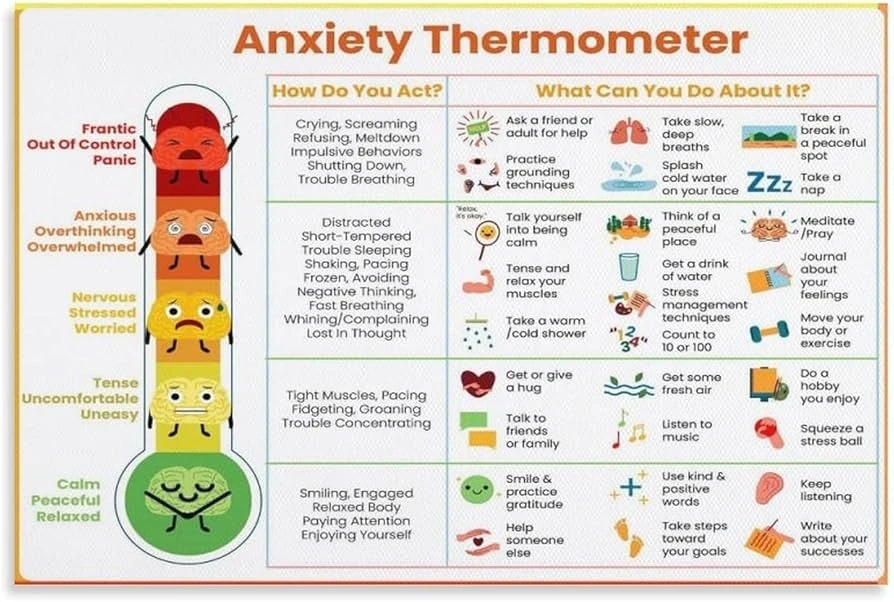
Image Source: Amazon.com
Visual elements in your therapy office directly influence client physiology. Art actively participates in therapeutic work by communicating with the nervous system through pathways that bypass verbal processing entirely.
How calming art regulates the nervous system
Neuroscience reveals compelling evidence about art's regulatory capacity. Calming imagery triggers neurobiological responses throughout the body. Studies demonstrate that specific visual elements can reduce stress, anxiety, and even pain levels [1]. This occurs because appropriate visual stimuli activate the parasympathetic nervous system—your client's natural "rest and digest" response—effectively quieting stress and anxiety [12].
Rhythmic patterns and repetitive elements in artwork establish feedback loops between mind and body. Clients naturally synchronize their breathing with these visual rhythms, promoting deeper, more regulated breathing patterns [6]. Even viewing textured surfaces creates present-moment anchoring, helping anxious clients ground themselves in the "here and now" [6].
Calming imagery functions as an emotional regulation tool. When clients engage with soothing visuals, their brains release dopamine—a neurotransmitter that elevates mood and supports wellbeing [6]. This neurochemical shift moves internal states away from threat-detection toward safety and presence.
Examples: nature abstracts, horizon lines, soft textures
Certain visual elements consistently create regulated therapeutic environments:
Nature imagery provides powerful calming effects. Research shows that viewing serene beaches, lush forests, or mountain landscapes significantly improves mood and reduces nervous tension [3]. The regulatory impact is so pronounced that disconnection from natural environments can prevent individuals from accessing stress reduction and mood enhancement benefits [12].
Horizon lines offer unique grounding properties. Minimalist horizon compositions create expansiveness and perspective that clients find stabilizing. Clean horizontal elements establish visual stability and structural order [11]. These artworks typically feature soft blues, gentle greens, or muted earth tones—colors proven to support relaxation and emotional balance [1].
Organic shapes and soft textures provide additional regulatory benefits. Gentle, flowing forms contrast with the harsh angles of built environments [5]. Viewing these softer patterns shifts nervous systems from alertness toward relaxation [5]. Rounded corners, curved lines, and natural forms mirror nature's comforting shapes that humans instinctively find soothing.
Color choices significantly impact regulation. Research supports selecting artwork with calming palettes including blues, greens, and earth tones [1]. These colors produce measurable physiological changes, reducing blood pressure, stabilizing heart rate variability, and lowering stress hormone production [3].
Why this matters for anxiety and trauma clients
Regulatory art becomes particularly crucial for clients managing anxiety or trauma histories. Trauma responses frequently manifest through autonomic nervous system dysregulation, creating hyperarousal or shutdown states that block therapeutic progress. Regulation-promoting art provides non-verbal stabilization resources.
COVID-19 pandemic studies found that access to calming visual elements correlated with lower perceived stress in individuals experiencing heightened anxiety [12]. This research confirms art's role as an environmental intervention for clients facing acute or chronic stress.
Trauma-informed care prioritizes environments that establish safety and prevent re-traumatization. Visual assessment represents a primary channel through which clients evaluate safety. Office art that draws attention gently and predictably supports the "felt sense" of security essential for trauma work [11].
Art also teaches regulation skills. Clients who notice how specific images affect their physiological responses gain insight into their nervous system patterns. This awareness builds toward greater autonomic regulation capacity—a fundamental trauma treatment objective.
Regulated spaces enable therapeutic vulnerability. Clients cannot access their prefrontal cortex for insight-oriented work when their nervous systems remain dysregulated. Selecting art that promotes physiological calm establishes the neurobiological foundation necessary for therapeutic progress.
For trauma survivors especially, incorporating natural elements into indoor therapeutic spaces brings nature's beneficial effects inside—reducing cortisol levels and creating grounding experiences within the clinical environment's safety [8].
Art That Invites Projection and Metaphor
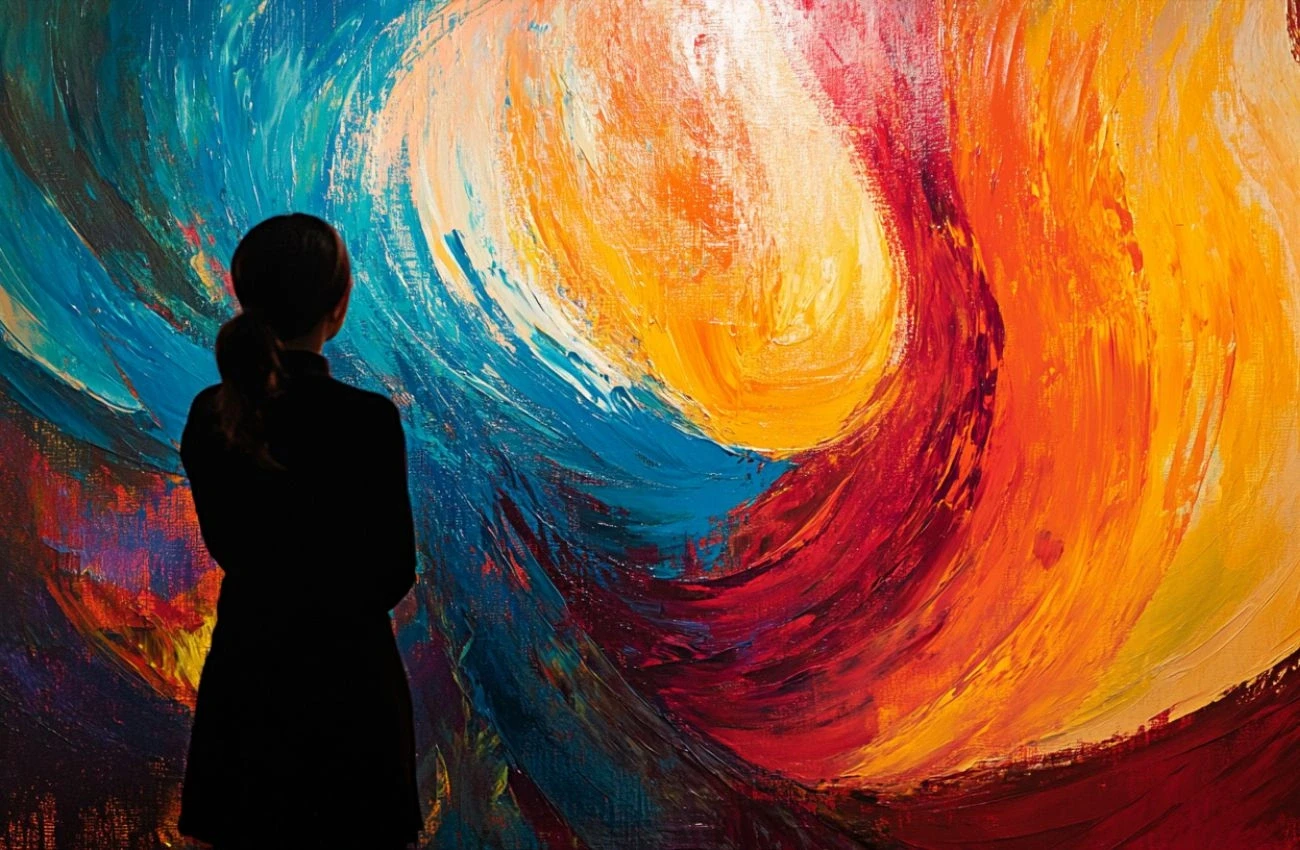
Image Source: Stone and Gray
Carefully selected artwork serves a second therapeutic function beyond nervous system regulation—creating opportunities for clients to discover personal meaning through visual interpretation. Art that invites projection allows clients to explore their internal landscape through metaphors they uncover naturally.
How ambiguous imagery supports introspection
Personal interpretation drives the power of ambiguous art. Abstract or metaphorical imagery encourages clients to project their own meanings, experiences, and emotions onto visual elements [11]. This mirrors therapy's essential process—helping clients create personal meaning from their experiences.
Interpretive art bridges the gap between internal experience and external expression. Abstract pieces offer distinct advantages over representational artwork because they avoid triggering specific memories or emotional responses that might disrupt therapeutic flow [11]. A realistic landscape could remind someone of trauma, while abstract art provides safe space for interpretation without predetermined narratives.
This quality makes ambiguous imagery valuable for self-discovery work. Art therapists observe that "Students who are afraid to share their fears or self-doubts verbally can use art to share private thoughts or feelings without having to verbally divulge them" [8]. Adult clients facing similar verbal expression challenges benefit from these same opportunities.
Ambiguous imagery creates "projective space"—room for clients to unconsciously reveal their inner world through interpretation. Similar to traditional psychological projective tests, art inviting multiple interpretations offers glimpses into emotional states, current preoccupations, and thinking patterns.
Examples: symbolic photography, abstract forms
Several artistic approaches effectively evoke projection and metaphorical thinking:
Abstract prints featuring organic shapes and flowing lines permit personal interpretation without imposing specific narratives [11]. These works typically showcase soft forms rather than harsh geometric patterns that might overstimulate visually [19]. Without concrete imagery, clients discover what resonates with their current emotional state.
Symbolic photography provides another powerful projective medium. Self-portraiture particularly serves as a valuable therapeutic tool that "can trigger meaningful reflections in therapy contexts, helping people explore and redefine their identity over time" [12]. Photography works therapeutically because "human thought is essentially visual, where our past experiences, future imagination, and fantasies are formed as mental images" [12].
Photography incorporating symbolic elements enables visual expression of complex emotions. One photographer describes this: "In my case I would never say out loud: I'm depressed, I hurt all the time, I feel so shattered and broken and lonely, I just want to disappear" [12]. These feelings might emerge through engagement with symbolic imagery instead.
Collage work offers additional projective possibilities. Creating emotionally expressive images using cut-outs, photos, and mixed media allows clients to "work quickly and spontaneously, as free of internal verbal commentary as possible" [10]. Resulting compositions often reveal themes and emotions clients hadn't consciously intended to express.
Metaphorical imagery featuring pathways, doors, bridges, or natural transitions invites clients to consider their personal journey. This imagery "can convey full stories and experiences" [12] without requiring explicit verbalization—ideal for therapeutic settings where direct communication feels overwhelming.

Using art as a conversation starter
Projective art creates natural conversation bridges during therapy sessions. Art can "act as a 'conversation starter,' allowing kids to share stories, metaphors, or experiences connected to their artwork" [6], with this principle extending to adults. Visual elements provide a third focal point—something both client and therapist observe together, creating triangulated dialogue that often feels safer than direct questioning.
Some therapists deliberately use abstract artwork as projective tools, "asking clients what they see or feel when looking at a piece, which can provide insights into their emotional state" [11]. This approach parallels traditional projective assessment techniques while occurring in more natural, less clinical contexts.
Abstract art's ambiguity makes it "universally acceptable across diverse cultural backgrounds, religious beliefs, and personal preferences, making it ideal for practices serving varied populations" [11]. This inclusivity ensures projective space remains accessible across different backgrounds.
For trauma processing, art provides unique expression pathways. "With trauma, it's often difficult for children to process any of their emotions at first. Making art allows them to navigate through the grief or anger process within their own space of comfort" [8]. Through creating or responding to art, clients gradually externalize and process complex emotions.
Art inviting projection honors client autonomy in meaning-making. Unlike instructional imagery telling clients what to think or feel, projective art creates space for personal discovery—a core value across therapeutic approaches. Surrounding clients with imagery welcoming their unique interpretations silently communicates that their perspective matters and their inner experience deserves exploration.
Art That Represents Wholeness and Complexity
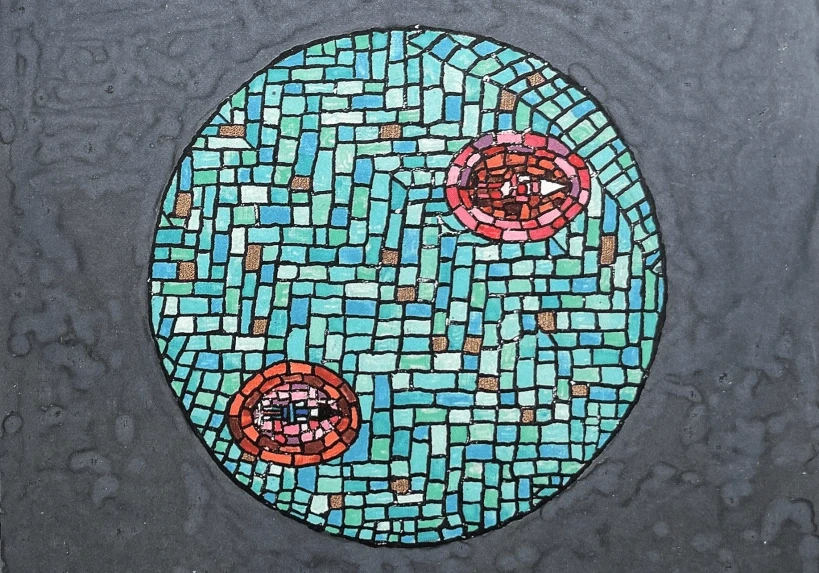
Image Source: Arts of Thought
Therapy guides clients toward integration—reconnecting fragmented parts of self into a unified whole. Your clinical space can model this healing process through art that visually demonstrates how separate elements create something greater together.
Why integration matters in therapy
Integration sits at the heart of psychological healing. Clients often enter therapy feeling disconnected from parts of themselves or experiencing internal fragmentation, particularly after trauma. The therapeutic process works to reconnect these separated aspects into a more cohesive sense of self.
Art showing wholeness emerging from separate elements provides a visual parallel to this healing journey. Art therapists observe that "the ability to organize and order mosaic pieces is reflected inwardly into the ability to restore order and harmony within the self" [11]. This visual representation becomes especially meaningful for clients struggling with fragmented self-states or dissociative experiences.
Integrated artwork creates a template for clients still developing emotional complexity. The American Art Therapy Association notes that engaging with creative arts "allows individuals to express emotions that may be difficult to articulate verbally" [12]. This non-verbal expression proves valuable when clients struggle to put contradictory feelings into words.
Complex art serves another critical function—normalizing the coexistence of seemingly opposing elements. Just as therapy helps clients hold contradictory truths simultaneously, integrated art pieces show that contrast, tension, and diversity can exist within a single cohesive whole.
Examples: mosaics, light/shadow interplay, rivers merging
Mosaic artwork offers the most direct representation of integration in therapy environments. These compositions transform "humble pieces of glass, stone, or ceramic into unified works of beauty" [12]. The metaphor speaks clearly—broken fragments coming together to create something more meaningful than individual parts.
Mosaic art provides therapeutic benefits that mirror the integration process. The American Journal of Public Health reports that "adults who engaged in arts-based activities—including mosaic-making—reported reduced feelings of stress and improved mental health" [12]. For trauma survivors, mosaics hold particular significance as "the cut-up pieces of materials, mixed up and scattered, prior to starting a mosaic panel seem to represent a state of chaos which reflects the psychological state of the survivor" [11]. The shift from scattered fragments to unified composition offers a powerful visual metaphor for healing.
Light and shadow interplay creates another compelling representation of complexity. Japanese aesthetic principles show how "light assumes the role of a predecessor, giving birth to materiality, while the very purpose of material finds its expression in casting evocative shadows" [13]. This interplay reminds viewers that both elements are necessary for a complete experience.
Architect Juhani Pallasmaa explains that "deep shadows and darkness are essential, because they dim the sharpness of vision, make depth and distance ambiguous, and invite unconscious peripheral visions and tactile fantasies" [14]. The therapeutic process often involves bringing shadow aspects of self into relationship with more visible elements. Wall art featuring this interplay can model the integration of light and dark aspects within human experience.
River imagery represents a third powerful motif for therapeutic spaces. Rivers naturally symbolize "the fluid nature of identity" where "the banks of the self are real, they give you direction, but they are not impervious" [7]. This imagery captures the dynamic, flowing nature of therapeutic growth.
Confluence—where streams join to create something larger—provides a particularly relevant metaphor. Confluence means "flowing together" and creates a visual representation of how separate elements can merge while maintaining their essence [15]. This imagery resonates with therapy's goal of integrating different aspects of self without erasing their unique contributions.
Non-verbal modeling of self-acceptance
Complex art demonstrates acceptance of contradictions before clients can verbalize this themselves. Art "empowers children with the freedom to control their communication, allowing them to convey their emotions and experiences in a non-verbal way" [16], and this principle extends to adults as well.
Integrated art pieces silently communicate essential messages:
Broken parts belong - Mosaic art shows how fragmented elements contribute to meaningful wholes, demonstrating that damaged or separated aspects remain valuable
Contrast creates depth - Light/shadow interplay illustrates how opposition generates richness rather than conflict
Change remains constant - River imagery reinforces that identity remains fluid while maintaining continuity
This non-verbal communication becomes especially valuable when clients lack language for complex emotional states. As one therapist notes, "traumatic experiences can often be difficult to articulate into words" [17]. Art that embodies complexity provides a visual vocabulary for experiences that initially resist language.
Art representing wholeness and complexity serves as a precursor to the integration clients may achieve. Your walls silently demonstrate the very integration that therapy works to facilitate—showing clients visual evidence that fragmentation can become cohesion.
Art That Reflects Inclusivity and Safety
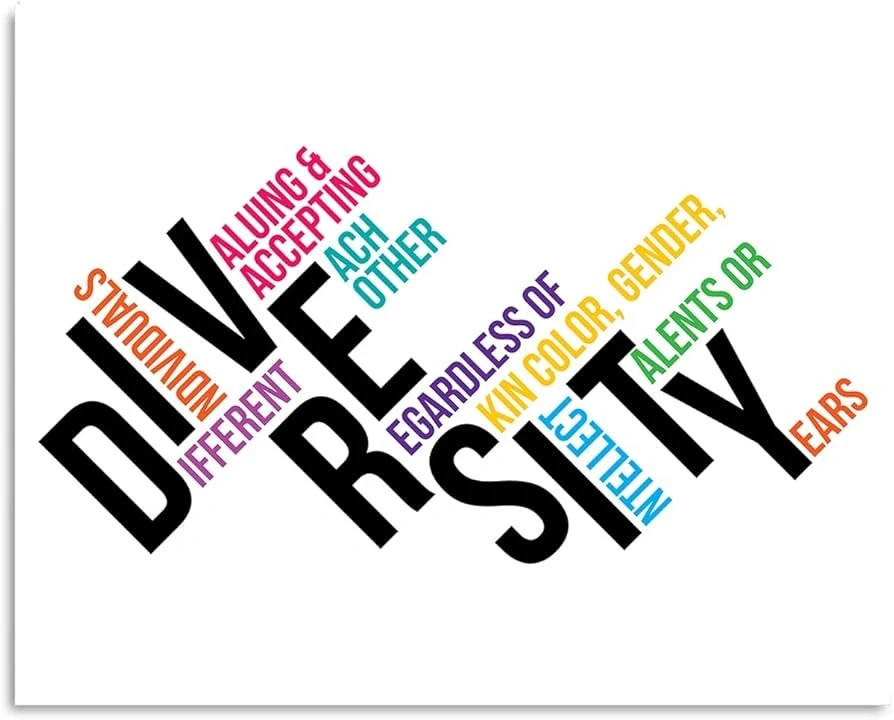
Image Source: Amazon.com
Your practice walls speak before you do. Each piece of art communicates who belongs in your therapeutic space, whose experiences hold value, and which stories deserve recognition. Inclusive artwork functions as more than decoration—it becomes essential infrastructure for psychological safety.
Visual representation of diversity
Client responses improve measurably when office art reflects diverse cultural traditions. Research comparing therapist offices found that community members from ethnic minority backgrounds rated therapists more favorably when displayed art represented diverse cultural traditions beyond Western norms [18].
Culturally diverse artwork accomplishes several clinical goals:
Creates immediate connection - Clients form instant impressions upon entering your space, with their minds automatically linking visual elements to personal experiences [19]
Demonstrates openness - Art reflecting different cultures helps clients feel understood and accepted [19]
Prevents feelings of exclusion - "If all of the artwork clients see represents a tradition different than their own, it is possible for them to feel unwelcome" [18]
Effective inclusive art features diverse representation. Artwork showing "a diverse group of individuals with disabilities" helps "create a sense of inclusion, diversity, and acceptance" [20]. These visual cues communicate that "everyone is welcome" and "we all belong here" [20] without requiring verbal explanation.
Avoiding exclusionary or stereotypical imagery
Appropriate art selection demands careful attention to avoid potential harm. Your office decorations should exclude potentially triggering or alienating imagery:
Violent or aggressive scenes
Predatory animals or birds
Complex or intrusive patterns
Dark or disturbing themes
Isolating or lonely imagery [19]
Cultural sensitivity requires additional consideration when selecting therapeutic spaces. While diverse elements can build connection, avoid cultural appropriation. Select items with cultural significance only if "you have a meaningful connection to that culture or have obtained them with respectful intent" [21].
Nature-inspired elements like plants or natural textures offer safer alternatives, "which can be universally appreciated across cultures" [21]. This approach maintains accessibility without appropriating specific cultural symbols.
How inclusive art builds trust
The therapeutic alliance depends fundamentally on trust. Inclusive art contributes directly to this foundation through visual cues signaling safety. Art therapy research shows trust encompasses "trust in the safety of the clinical space, trust in confidentiality, trust in a nonjudgmental approach" [22].
Neurodivergent clients require emotionally safe spaces that "embrace difference" [23]. Your wall art choices can visually reinforce that diversity receives welcome rather than mere tolerance. Consider art celebrating "unique forms of expression" and conveying that "emotional diversity is not a challenge to be managed—it's a richness to be embraced" [23].
Inclusive spaces function as places "where LGBTQ+ teens and all others who are seeking a welcoming and supportive community can gather" [24]. This inclusivity matters because "a safe space is key for expression, acceptance, and healing" [24]. The physical environment, including wall art, establishes this psychological safety.
Inclusive art creates conditions where clients feel they belong. One client described effective therapy by emphasizing their therapist's authenticity: "You're real. You don't give me any BS response. You care about me" [22]. Your wall art reinforces these messages silently, showing clients through visual representation that their authentic selves—regardless of background, ability, identity, or experience—hold value in your space.
Art That Offers Restful Focus
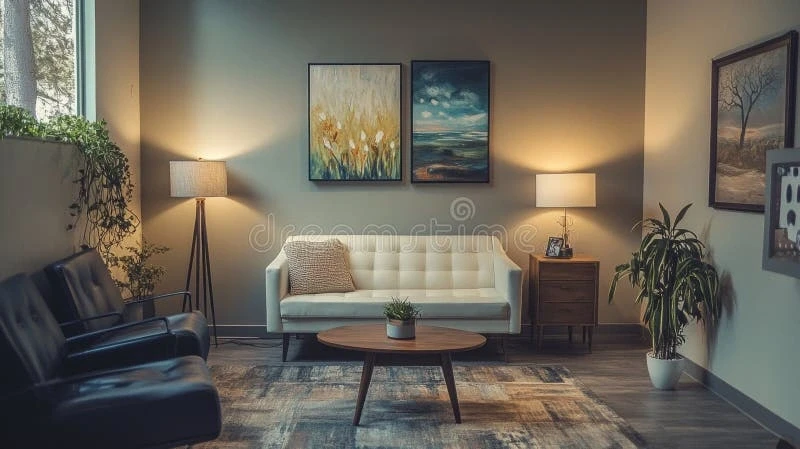
Image Source: Dreamstime.com
Clients' eyes need somewhere safe to land when emotions intensify or words fail them. Carefully selected wall art functions as a visual anchor, providing restful focus that supports rather than disrupts the therapeutic process.
The importance of gaze-friendly art
During emotionally challenging moments, clients naturally seek visual refuge. Their eyes move throughout your office space before settling on wall artwork [25]. This visual wandering serves an essential psychological purpose—offering momentary respite from emotional intensity while keeping clients engaged in the therapeutic environment.
Effective therapy art provides a psychological "pause button" when clients need it most. Therapy requires clients to engage deeply with difficult emotions, so your artwork shouldn't add to that cognitive load. Instead, it should offer visual relief [2]. Clients benefit from having safe places to rest their gaze while processing vulnerable feelings or gathering their thoughts.
Visual crowding creates additional stress for clients already managing intense emotions. Art that's overly busy or detailed compounds this problem. Successful therapy room art includes:
Simple compositions with clear focal points
Generous negative space
Uncluttered backgrounds
Soft, unfocused areas that don't demand constant attention [2]
These elements support nervous system regulation without creating visual overstimulation. Research confirms that clients benefit from having "something else to look at while processing difficult emotions and feelings" during therapy sessions [26].
Examples: soft landscapes, minimal compositions
Specific artwork types consistently provide restful focus without overwhelming clients:
Gentle water scenes serve as ideal focal points. Artwork featuring calm ponds and peaceful seas offers predictability and safety—essential qualities for therapeutic environments [2]. The gentle ripples and soft reflections guide attention without demanding intense focus.
Horizon line artwork creates another excellent option. These compositions generate feelings of openness and expansiveness that clients find naturally soothing [2]. Clean horizontal elements establish visual stability and order, helping minds settle into the therapeutic space.
Seasonal imagery offers familiarity and grounding—particularly valuable in clinical settings [2]. These scenes connect clients to natural cycles and recognizable experiences, providing comfort through visual familiarity.
Abstract compositions featuring gentle forms and muted tones create calming environments without visual chaos [4]. Their simplicity allows for visual rest while maintaining subtle engagement—perfect balance for therapeutic work.
Nature photography deserves special attention for its proven ability to reduce stress, lower cortisol and blood pressure levels, and alleviate depression and anxiety [9]. These images function as "visual anchors patients can return to during difficult moments" [27].
Balancing visual interest with calm
Creating effective therapy room art requires careful balance—engaging enough to maintain interest without causing overstimulation. This balance emerges through specific design elements:
Color selection significantly impacts visual comfort. Blues, greens, and neutral tones naturally relax the eyes and encourage slower breathing [4]. These color palettes support therapeutic work without becoming visually sterile.
Composition clarity ensures clients can engage with artwork effortlessly. Clean lines, white space, and soft tones create calm spaces that support contemporary therapeutic aesthetics [4].
Subtle patterns add visual interest without creating chaos. Gentle monochrome elements help focus attention without generating visual noise—ideal for therapeutic environments [4].
Texture integration provides dimension while maintaining simplicity. Artwork combining subtle textures with soft gradients creates depth and gentle movement without visual complexity [4].
Art with adequate visual breathing room becomes particularly important in therapeutic contexts where mental processing is already intensive [2]. Clients need places for their eyes to rest, especially during emotionally demanding sessions.
Most effectively, colorful or scenic artwork offers "something else to look at while processing difficult emotions" [26]. This visual alternative provides temporary mental escape while maintaining therapeutic presence.
Successful therapy room art achieves the essential balance: visually engaging enough to provide comfort without demanding constant attention. Your goal remains creating a visual environment that supports—never competes with—the important therapeutic work happening in your space.
Therapy Wall Art Quick Reference Guide
Art Category | Clinical Function | Essential Elements | Therapeutic Impact | Effective Options | Key Guidelines |
Regulates and Grounds | Supports nervous system regulation and physiological calm | Horizon compositions, organic textures, nature elements, blues/greens/earth tones | Activates rest response, reduces anxiety, stabilizes breathing patterns | Seascapes, forest views, mountain imagery, abstract nature forms | Critical for clients with anxiety or trauma histories |
Invites Projection and Metaphor | Facilitates personal meaning-making and self-discovery | Abstract imagery, symbolic content, ambiguous forms, open interpretation | Enables non-verbal expression, supports introspection, encourages exploration | Abstract compositions, symbolic photography, pathway imagery, bridge motifs | Avoid literal representations that might trigger memories |
Represents Wholeness and Complexity | Models integration and emotional complexity | Unified compositions from separate parts, contrasting elements, flowing connections | Demonstrates healing possibilities, normalizes contradictions, supports integration work | Mosaic compositions, light/shadow pieces, river confluences, mandala forms | Should visually show fragments becoming unified wholes |
Reflects Inclusivity and Safety | Communicates belonging and psychological safety | Diverse representations, universal themes, culturally sensitive imagery | Builds therapeutic alliance, creates immediate connection, prevents exclusion | Multi-cultural artwork, nature universals, accessible abstract forms | Avoid stereotypes, appropriation, or potentially alienating content |
Offers Restful Focus | Provides visual anchoring during emotional processing | Clean compositions, clear focal points, ample white space, gentle complexity | Supports regulation, offers visual respite, maintains therapeutic engagement | Calm water scenes, minimal landscapes, seasonal imagery, soft abstracts | Balance engagement with simplicity to prevent overstimulation |
Conclusion
Psychology wall art changes your therapy space from a basic room into an active healing environment. Each piece you've explored serves a specific clinical purpose—functioning as more than decoration to actively support the therapeutic process.
Wall selections shape client experiences before conversations begin. Regulating art with natural elements, horizon lines, and soft textures provides crucial nervous system support. This becomes especially important for clients managing anxiety or trauma responses.
Ambiguous imagery creates another therapeutic layer. Abstract forms and symbolic photography allow clients to project their experiences without requiring direct verbalization. These pieces offer valuable opportunities for personal discovery and metaphorical understanding that supports healing.
Art representing wholeness and complexity serves as visual models for integration. Mosaics and light/shadow interplay demonstrate how fragmented elements can unite meaningfully—a powerful parallel to therapeutic goals many clients pursue.
Your art choices communicate belonging. Diverse, inclusive imagery builds trust immediately, showing clients they are welcomed as they are. This visual safety becomes essential for establishing the therapeutic alliance that meaningful work requires.
Art offering restful focus provides necessary visual anchoring during intense moments. Clear focal points, generous negative space, and calming elements give clients somewhere safe to rest their gaze while processing difficult feelings.
The art adorning your therapy office walls actively participates in healing.
Your thoughtful curation establishes an environment where clients feel regulated, understood, accepted, and secure. These visual elements support therapeutic progress in ways words cannot accomplish alone.
Ready to Create Your Therapeutic Environment?
Mental health professionals recognize that every detail in their practice space matters. The right wall art doesn't just decorate—it actively supports your clinical work by regulating nervous systems, facilitating emotional processing, and creating the safety your clients need to engage in meaningful therapeutic work.
Yung Sidekick understands the importance of creating optimal therapeutic conditions. Our AI-powered session documentation tool helps you capture every therapeutic insight while staying fully present with your clients. Get Progress Notes, Therapist, and Client reports in minutes, allowing you to focus more energy on creating the perfect healing environment—including selecting the ideal wall art for your practice.
Key Takeaways
Transform your therapy space into a healing environment with these evidence-based psychology wall art strategies that actively support the therapeutic process.
• Choose regulating art with natural elements, horizon lines, and soft textures - These visual elements activate the parasympathetic nervous system, reducing client stress and anxiety before therapy even begins.
• Select ambiguous imagery like abstract forms and symbolic photography - This allows clients to project personal meaning and discover metaphors for their healing journey without triggering specific memories.
• Display art representing wholeness through mosaics and light/shadow interplay - These pieces visually model integration, showing clients how fragmented parts can unite into something meaningful and complete.
• Ensure inclusive representation that reflects diverse backgrounds and experiences - Culturally diverse artwork builds immediate trust and communicates that all clients belong in your therapeutic space.
• Provide restful focus with simple compositions and generous negative space - Clients need visual anchors during emotional processing, and uncluttered art offers psychological respite without overstimulation.
Your wall art choices function as silent co-therapists, actively participating in healing by regulating nervous systems, facilitating self-discovery, and creating the psychological safety essential for therapeutic progress.
FAQs
What types of art are most beneficial for mental health in a therapy setting?
Art featuring natural elements, soft textures, and calming colors like blues and greens can be particularly beneficial. Nature scenes, abstract compositions with gentle forms, and imagery with clear horizon lines tend to promote relaxation and emotional regulation.
How can wall art in a therapist's office support the therapeutic process?
Thoughtfully chosen wall art can regulate clients' nervous systems, invite personal interpretation, model integration of complex emotions, communicate inclusivity, and provide restful focus during intense moments. The right art serves as a silent co-therapist, supporting healing beyond verbal communication.
What should be considered when selecting inclusive art for a therapy space?
Choose art that represents diverse cultural backgrounds, abilities, and experiences to help all clients feel welcome. Avoid stereotypical or potentially triggering imagery. Nature-inspired elements and abstract compositions can be universally appreciated while still conveying inclusivity.
How can art help clients process difficult emotions during therapy?
Art that offers ambiguous or symbolic imagery allows clients to project their own meanings, facilitating self-discovery and non-verbal expression of complex feelings. Additionally, art with clear focal points and uncluttered compositions provides a visual anchor for clients to rest their gaze while processing intense emotions.
What role does color play in therapeutic wall art?
Color selection significantly impacts the therapy environment. Blues, greens, and earth tones are often recommended for their calming properties. These colors can help lower stress levels, promote relaxation, and create a sense of safety. However, it's important to balance color choices to maintain visual interest without overstimulation.
References
[1] - https://blog.zencare.co/therapist-office-decor-ideas/
[2] - https://www.artfullywalls.com/visual-search/psychology-wall-art?srsltid=AfmBOoqbA_iVT_bqjB16P4BS5Mo-K1fAIFBBax-ZvXnqCO5C38YtCO91
[3] - https://frametolia.com/blogs/news/how-calming-wall-art-can-help-with-mental-health?srsltid=AfmBOor9Qt3K9yV07ReSJiRu72V6K-OWzqtmZH6b5j5xScW1wGrCih6J
[4] - https://pmc.ncbi.nlm.nih.gov/articles/PMC12082256/
[5] - https://mindfulartstherapy.com.au/10-ways-art-regulates-your-nervous-system/
[6] - https://www.awakenthechange.com/other/natures-remedy-9-stunning-pictures-to-ease-your-mind-and-help-reduce-stress-and-anxiety/
[7] - https://acousart.com/products/setting-boundaries?srsltid=AfmBOooraV8TfXMSXtqJ_QnPMdHmnSzqnMmaZwL5teH7Gk2D7QTX8JUA
[8] - https://swapnilnevgi.com/blogs/art-blog/wildlife-nature-art-benefits-mental-health-and-stress?srsltid=AfmBOooeX9wab5v5IA4UM_ZhvzJp3HzPuRYTynb29pOQJ3wURYyg7GUq
[9] - https://integrativecreativetherapy.com/bilateral-drawing-a-simple-powerful-way-to-regulate-your-nervous-system/
[10] - https://anchoredhopetherapy.com/creating-an-intentional-space-with-trauma-informed-design/
[11] - https://martaellie.com/collections/best-abstract-canvas-prints-for-therapist-office?srsltid=AfmBOooFygVqnW37Z47cPqxREhe8bSsQDImmn5A2oO3jyLe2c1YIEXBI
[12] - https://www.edutopia.org/article/art-pathway-sel-school-counseling/
[13] - https://yung-sidekick.com/blog/calming-mental-health-office-decor-ideas-that-actually-help-patients
[14] - https://andanafoto.com/en/therapeutic-photography-the-self-portrait/
[15] - https://maytheartbewithyou.com/symbolism-photography-self-healing/
[16] - https://positivepsychology.com/expressive-arts-therapy/
[17] - https://eastcobbrelationshipcenter.com/art-in-play-therapy-letting-creativity-guide-healing/
[18] - https://www.recoveringself.com/art/mosaic-art-therapy-interview-with-saad-r-mikhaiel
[19] - https://www.jumpintoartstudios.com/post/the-healing-power-of-mosaics-art-therapy-and-mindfulness-through-mosaic-making
[20] - https://www.adfwebmagazine.jp/en/design/the-dynamic-duo-exploring-the-interaction-of-light-and-shadow-in-interior-design/
[21] - https://www.daylightandarchitecture.com/dwelling-in-light-tactile-emotive-and-life-enhancing-light/
[22] - https://mymythos.org/archetype/river/
[23] - https://www.psychologytoday.com/us/blog/having-fun/201708/confluence-unity-and-coliberation
[24] - https://www.casrf.org/post/the-unspoken-language-of-art-fostering-non-verbal-communication-through-creativity
[25] - https://www.jcmh.org/healing-through-art-self-expression-as-therapy/
[26] - https://www.apa.org/monitor/2017/03/healing-design
[27] - https://www.pinterest.com/pin/diversity-and-inclusion-posters-therapy-office-decor-school-counselor-social-worker-equality-safe-space-inclusive-wall-art-etsy--155303888009934203/
[28] - https://www.blueprint.ai/blog/designing-a-therapeutic-space-how-therapist-office-decor-enhances-the-client-experience
[29] - https://arttherapy.org/voices-art-therapy-trust-therapeutic-alliance/
[30] - https://www.thearttherapyresourceshub.com/creating-emotionally-safe-art-therapy-spaces/
[31] - https://commonthread.antioch.edu/creating-a-safe-space-for-expression-and-acceptance-through-art-therapy/
[32] - https://www.simonrobinstephensart.com/blog/choosing-art-for-therapy-rooms
[33] - https://lisalewiscounseling.com/how-to-decorate-an-online-therapy-office/
[34] - https://iluarttherapy.com/blogs/serenity-meditation-prints/mindfulness-wall-art-creating-calm-corners-therapeutic-spaces?srsltid=AfmBOoplViE4e0kUOTzcQQ5_ZgHzkZ3xmgO033OBwXrI4qR0mqbb0iNN
[35] - https://news.fiu.edu/2020/the-art-of-serenity
[36] - https://kurtjohnsonphotography.com/designing-for-mental-wellness-using-nature-art-in-behavioral-health/
If you’re ready to spend less time on documentation and more on therapy, get started with a free trial today
Not medical advice. For informational use only.
Outline
More articles