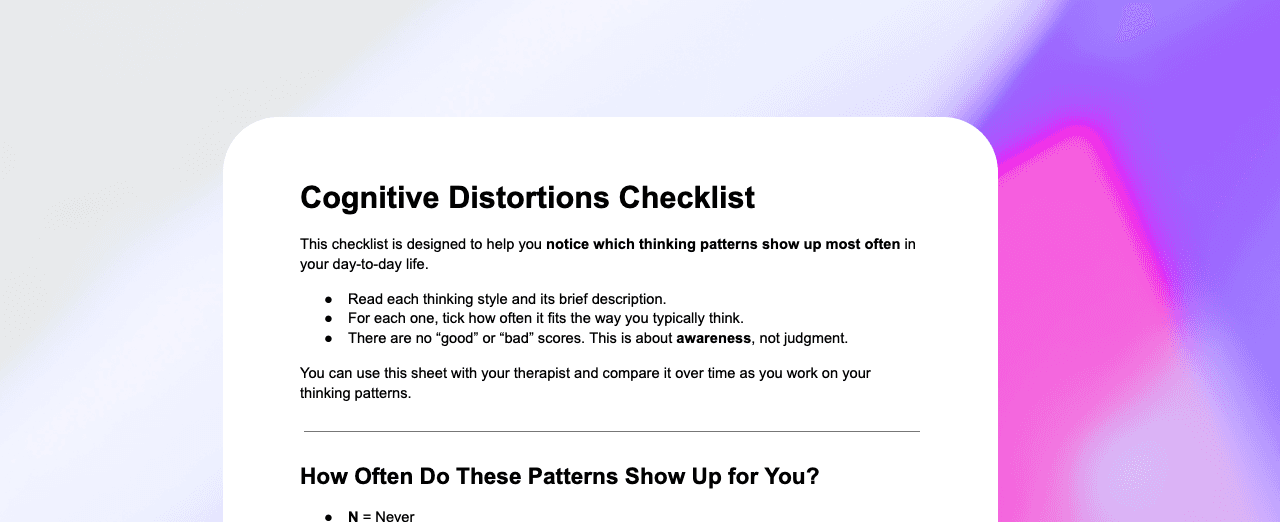
This worksheet helps clients quickly identify common thinking patterns driving low mood. It’s often used together with deeper restructuring tools from Cognitive distortions. Great as an early-session tool or a periodic “check-in” worksheet to measure progress.
Best for
CBT for depression and anxiety
Clients who struggle with self-criticism, catastrophizing, or rigid thinking
Identifying treatment targets and monitoring improvement
