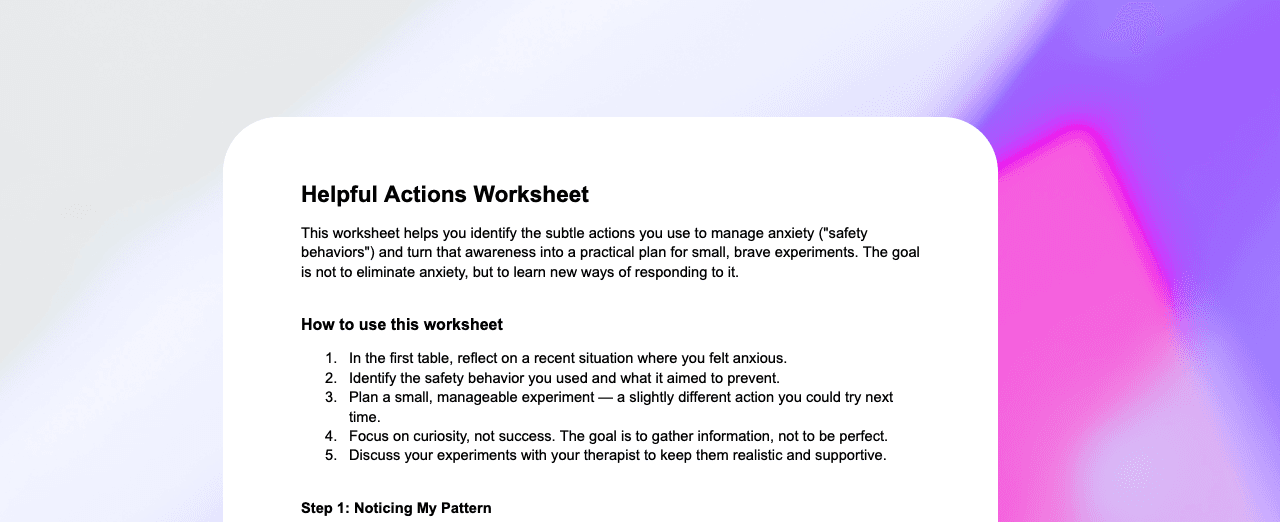
This worksheet helps clients define supportive behaviors for maintaining progress. It pairs well with structured planning tools from Behavioral activation. The focus is on curiosity and learning, not perfection, making it ideal for exposure-based work and behavioral experiments
Best for
Anxiety and avoidance patterns maintained by safety behaviors
Planning behavioral experiments between sessions
Supporting CBT and exposure-informed treatment goals
