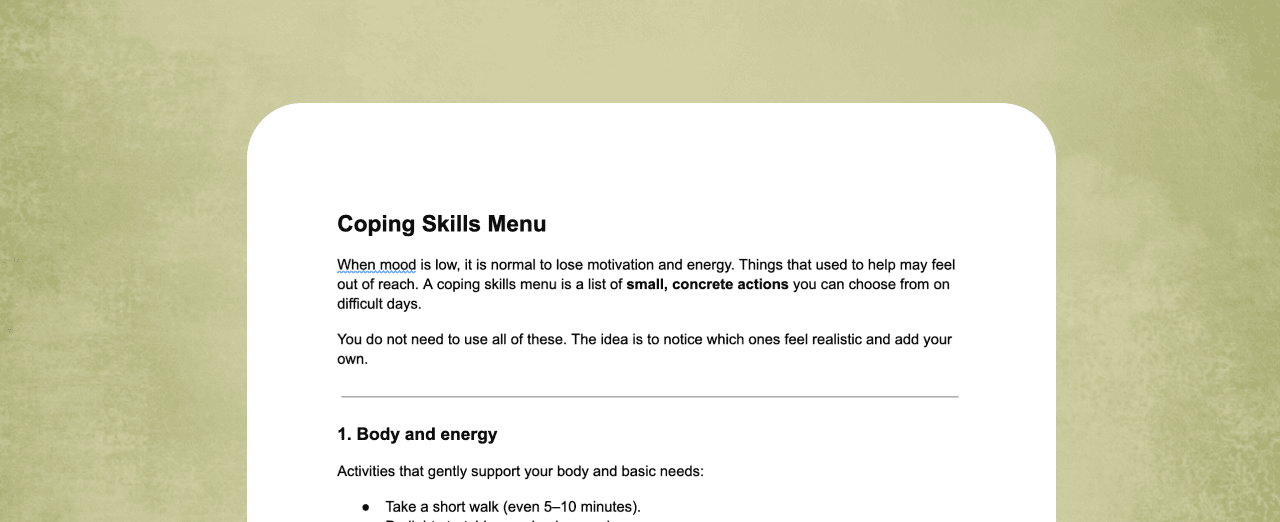
When mood is low, motivation and energy often drop — and helpful actions can feel out of reach. This Coping Skills Menu gives clients a clear, therapist-friendly list of small, concrete options they can choose from when they’re overwhelmed, stuck, or shut down. Use it to reduce decision fatigue, support behavioral follow‑through, and help clients build a personalized coping plan that actually feels doable. The menu can also be used to create “if‑then” plans (e.g., If I notice I’m spiraling, then I’ll pick one option from each section).
Best for
Depression-related low motivation and low energy
Clients who feel overwhelmed and don’t know what to do next
Between-session planning and relapse-prevention toolkits
FAQ
How are coping skills worksheets typically used in therapy?
Therapists use them to structure skill-building between sessions, reinforce in-session interventions, and help clients apply specific strategies in real-world situations.
When should coping skills be introduced in treatment?
They are often introduced early to stabilize emotional regulation, but can also be layered throughout treatment depending on client needs and symptom severity.
How do coping skills integrate with other therapeutic approaches?
They are commonly combined with behavioral activation, cognitive restructuring, and monitoring tools to support both immediate distress management and long-term change.
