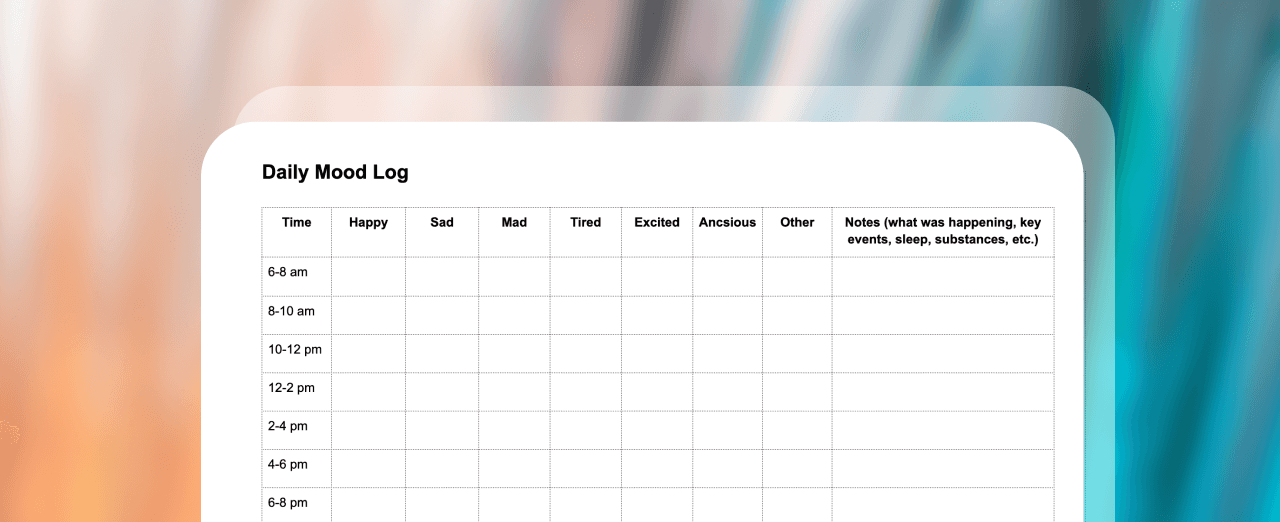
Mood tracking helps clients turn “I feel bad” into clear, usable data — making patterns visible and progress measurable. This pack includes a daily log for quick check-ins and a weekly chart for seeing trends over time. Use it to connect mood changes with sleep, activity, stressors, and coping strategies, and to support collaborative goal-setting in session.
Best for
Depression treatment planning and progress monitoring
Clients who struggle to notice patterns or recall week-to-week changes
Supporting CBT/BA interventions and relapse-prevention planning
FAQ
How is mood tracking used in clinical decision-making?
Therapists use mood tracking data to identify patterns, triggers, and variability over time, which helps inform case conceptualization and adjust interventions more precisely.
When should mood tracking be introduced in therapy?
It is often introduced early in treatment to establish baseline patterns, but can also be implemented later to monitor progress or evaluate the impact of specific interventions.
How does mood tracking integrate with other therapeutic techniques?
It is commonly combined with behavioral activation, cognitive restructuring, and relapse prevention planning to link emotional patterns with thoughts and behaviors.
