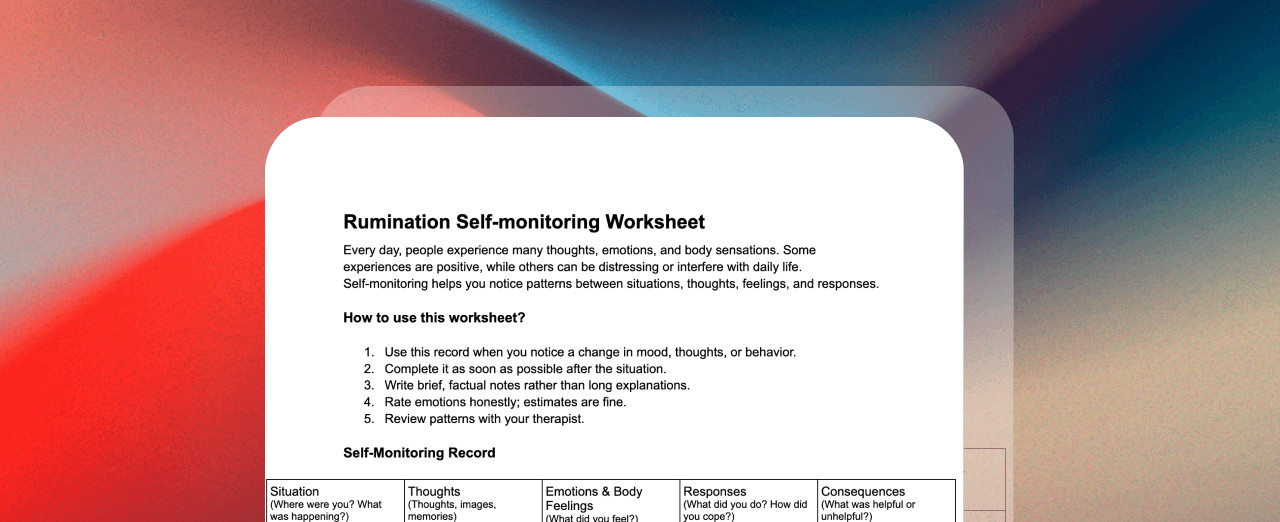
Rumination can feel like “problem-solving,” but often keeps clients stuck in low mood and self-criticism. This pack helps clients understand what rumination is, how it shows up for them, and how to recognize early cues before the spiral deepens. Use the psychoeducation handout to build shared language, then assign the self-monitoring worksheet to map triggers, themes, and the short-term vs long-term effects of ruminating. It’s a simple way to increase awareness and open the door to more flexible coping strategies.
Best for
Depression-related rumination and self-criticism
Clients who feel “stuck in their head” or replay events repeatedly
Supporting CBT/ACT-informed interventions focused on attention and behavior change
FAQ
How is rumination conceptualized in depression treatment?
Rumination is typically understood as a maladaptive cognitive process that maintains negative affect through repetitive, passive focus on distress, often addressed within CBT and metacognitive frameworks.
How are rumination worksheets used in clinical practice?
Therapists use them to help clients identify rumination triggers, increase awareness of repetitive thinking patterns, and shift toward more adaptive cognitive or behavioral responses.
How can therapists differentiate rumination from problem-solving?
Rumination is characterized by repetitive, abstract, and non-actionable thinking, whereas problem-solving is goal-directed, concrete, and leads to behavioral steps or decisions.
