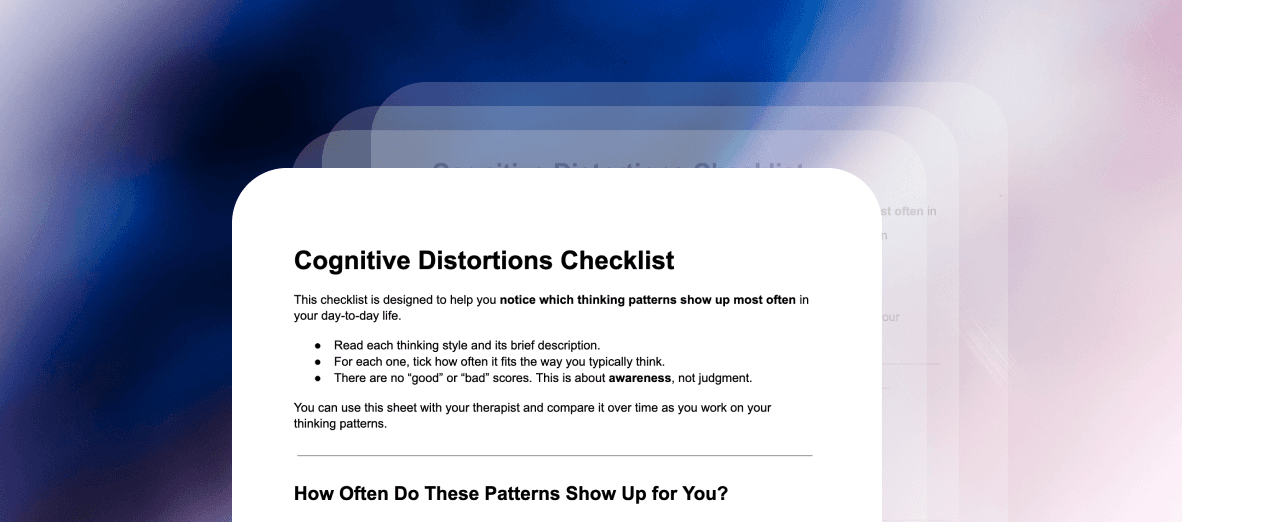
Cognitive Distortions: CBT worksheets to identify and reframe unhelpful thinking
Cognitive distortions are common thinking patterns that can intensify low mood, anxiety, and avoidance. This download gives therapists a structured set of CBT tools to help clients spot their “thinking traps,” understand how they show up day-to-day, and practice more balanced alternatives. Use the overview and checklist to build shared language quickly, then move into daily mood tracking and guided reflection sheet to strengthen insight and skill-building between sessions.
Best for
CBT for depression and anxiety
Clients prone to rumination, self-criticism, catastrophizing, or “all-or-nothing” thinking
Building insight + measurable homework between sessions
FAQ
How are cognitive distortions typically assessed in clinical practice?
Therapists identify distortions through thought records, session dialogue, and patterns observed across situations, often using structured worksheets to standardize this process.
When should cognitive distortion worksheets be introduced in therapy?
They are usually introduced after initial psychoeducation, once clients can reliably identify automatic thoughts and are ready for structured cognitive work.
How do these worksheets integrate into CBT protocols?
They are used as part of cognitive restructuring, often alongside mood tracking and behavioral interventions to link thought patterns with emotional and behavioral outcomes.
