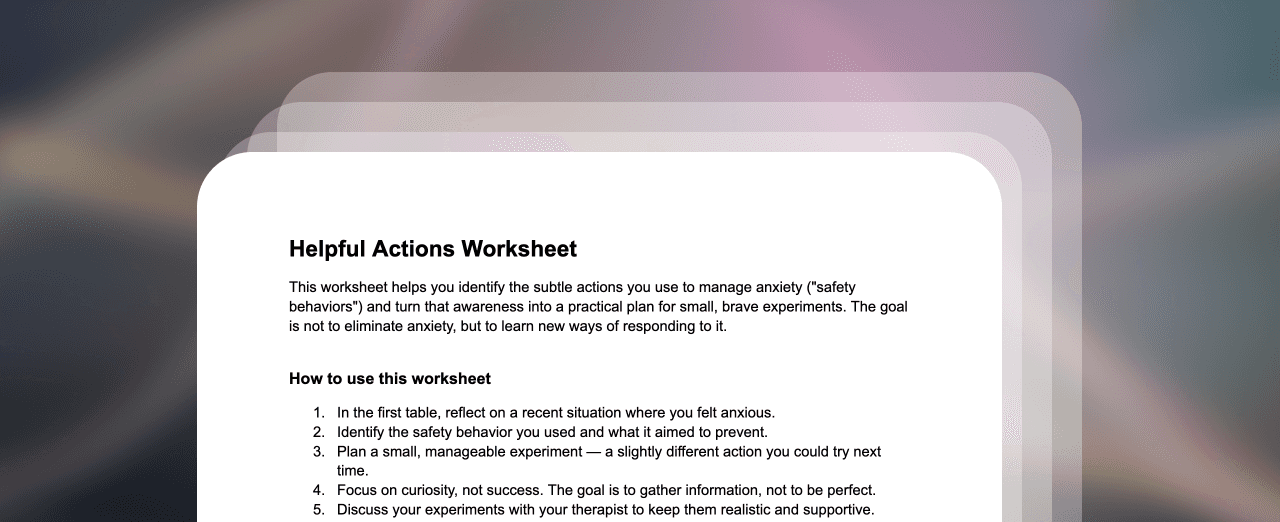
Relapse prevention focuses on maintaining progress and identifying early warning signs. Tools in Staying Well / Relapse Prevention often build on insights from Mood tracking, reinforce routines from Behavioral activation, and incorporate strategies from Coping skills. Use these worksheets to build a collaborative “maintenance roadmap,” support accountability between sessions, and reduce the likelihood of relapse by making next steps clear and actionable.
Best for
Maintenance and transition phases of treatment
Clients with recurring depressive episodes or seasonal patterns
Building a concrete plan for high-stress periods and life changes
FAQ
How is relapse prevention conceptualized in depression treatment?
Relapse prevention is typically approached as a structured phase of therapy focused on identifying early warning signs, consolidating gains, and developing individualized maintenance strategies.
When should relapse prevention be introduced in therapy?
It is usually introduced in later stages of treatment, once symptom reduction is achieved, but elements of relapse planning can be incorporated earlier depending on risk factors.
How are relapse prevention worksheets used in clinical practice?
Therapists use them to map triggers, define early warning indicators, and create actionable response plans that clients can apply independently after therapy ends.
