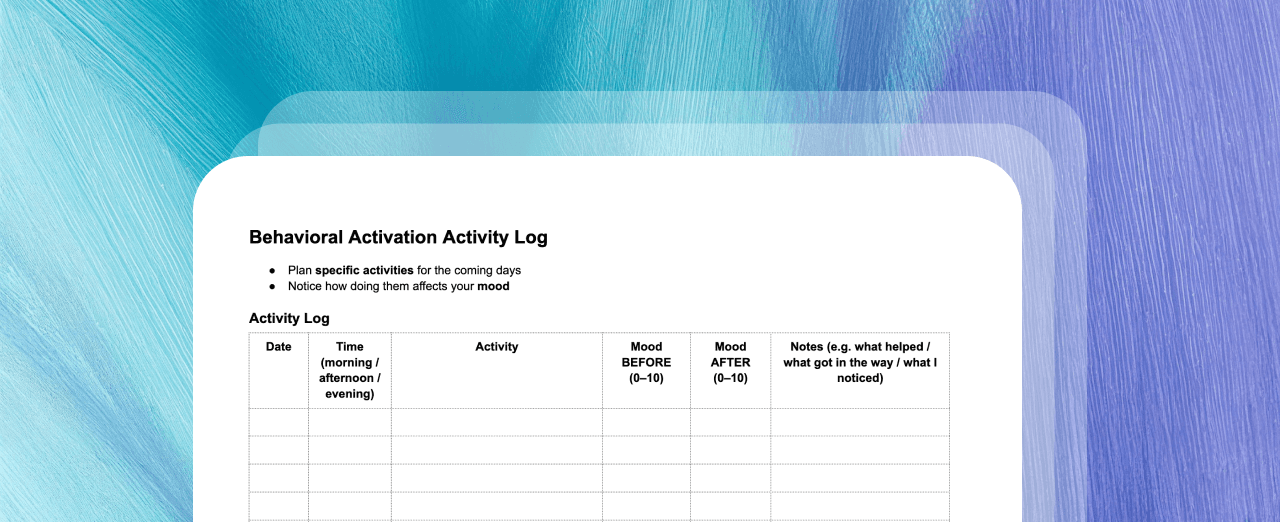
Behavioral activation helps clients re-engage with meaningful activities and reduce avoidance patterns that maintain depression. The tools in Behavioral activation focus on activity planning and scheduling, while often being used alongside monitoring from Mood tracking and cognitive work from Cognitive distortions to reinforce change. The goal is to make progress visible, increase follow-through, and support sustainable mood improvement.
Best for
Depression treatment using BA as a primary intervention or as part of CBT/ACT
Homework planning and accountability between sessions
Clients who feel stuck, disengaged, or overwhelmed by “where to start”
FAQ
When should therapists use behavioral activation worksheets?
They are most effective when clients show avoidance, low motivation, or reduced engagement in daily activities.
Can behavioral activation help with severe depression?
Yes, but it is typically used as part of a broader treatment plan alongside cognitive and emotional interventions.
How often should clients complete activation worksheets?
Usually between sessions, with regular review to track progress and adjust activity levels.
